
Pondlife — Fish, Frogs & More!
Runaway PlaySimulation
4.61.52K Reviews
- Version
- 1.25.11
- Installs
- 1.00M
- Age Rating
- Everyone
Screenshots
Our Review of Pondlife — Fish, Frogs & More!
 Analysis by Appyee
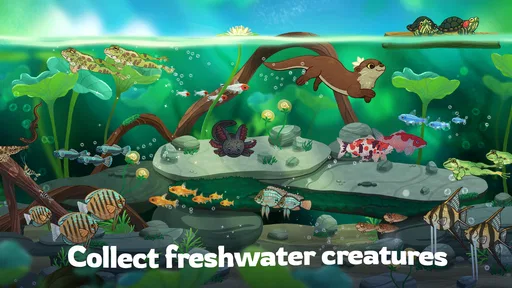
I spent time with Pondlife — Fish, Frogs & More! as a small, low-pressure simulation game, and its appeal became clear quickly: it is built for short visits rather than demanding sessions. The idea is simple enough to understand immediately, but the pond setting gives those small interactions a calmer personality than the usual management or farming games. You look after aquatic life, return to see how the pond develops, and gradually turn a quiet screen into something that feels alive.
That simplicity is also the most important thing to understand before downloading it. This is not a strategy game with complicated planning, nor is it an action game that asks for fast reactions. I would describe it as a relaxing digital pond for people who enjoy gentle progress, light care-taking and checking in when they have a spare moment. The game is free to start, and Runaway Play has clearly aimed it at a broad audience: it carries an Everyone age rating and runs on Android 7.1 or later.
What the pond offers in everyday play
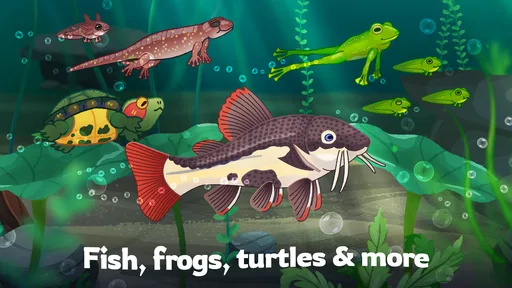
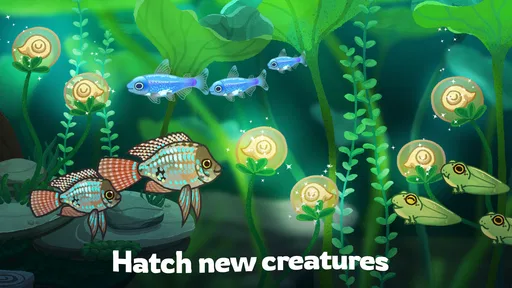
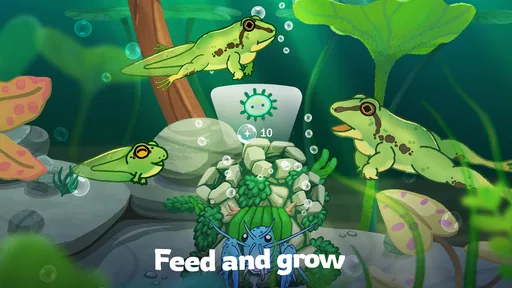
The experience works best when I treat it as a small routine. I can open it during a coffee break, make a few decisions around feeding and growing the pond’s inhabitants, then leave without feeling that I have abandoned a complicated task. That makes it a useful alternative to games that expect a long uninterrupted session. There is no pressure in the basic concept, and the fish, frogs and other pond creatures give the setting enough variety to keep it from feeling like a plain progress bar.
A realistic use case is a busy day when I want something interactive but do not have the energy for a competitive match. Instead of starting a large building game and worrying about timers, objectives or a crowded interface, I can spend a few minutes tending the pond. It is also a reasonable choice for a younger player who likes animals and gentle simulation, although parents should still remember that free games with optional purchases can encourage spending.
The game’s strongest quality is its mood. Many simulation titles turn every action into an optimization problem. Here, the pond theme makes the central loop feel more personal. Feeding is not just a resource action in my mind; it supports the feeling that the creatures are part of a living space. That distinction matters because the game’s entertainment comes less from mastering a system and more from enjoying the gradual change in the pond.
The best way to approach Pondlife is as a relaxing habit, not a game you need to finish. If I expect a deep campaign, a large collection of complex mechanics or constant surprises, I am likely to find the experience too light. If I want a pleasant place to return to between other activities, the design makes much more sense.
Free access and the question of spending
The game is free to download and play, which makes trying the basic experience straightforward. Optional in-app purchases range from $0.99 to $99.99 per item. That is a wide spread, so I would not judge its value by the existence of purchases alone. The practical question is whether the free experience already gives me enough enjoyment before I spend anything, and for a calm pond simulation, that is the test I would use.
I would begin without buying anything. The game’s central attraction is the pond itself, so I would first see whether feeding, growing and returning to the creatures remains satisfying over several visits. A small purchase may feel reasonable for someone who becomes attached to the routine, but a large purchase is difficult to justify purely for a casual game unless the player already knows exactly what extra value it provides. The free entry point is a genuine advantage; the upper end of the purchase range is a reason to keep spending deliberate.
There is an important difference between paid value and free value here. The free version lets me decide whether the atmosphere works for me before committing money. That is more useful than a game that asks for a purchase before I understand its pace. On the other hand, players who dislike any form of optional spending may prefer a one-time paid simulation with a clearly defined price, even if it offers less flexibility after installation.
I also recommend setting a personal rule before playing: enjoy the pond first, and only consider a purchase when I can name the specific frustration it would solve or the experience it would add. That prevents the relaxed mood from turning into impulsive spending. Because the game is designed around repeated visits, it is easy to mistake wanting faster progress for needing an upgrade. Those are not always the same thing.
How the progression feels compared with other simulation games
Compared with farming simulations, this game feels narrower and more peaceful. Farming games usually ask me to balance land, crops, tools, characters and schedules. That variety can be rewarding, but it also creates work. Pondlife avoids that broader workload by focusing attention on aquatic life and the pond environment. I lose some strategic depth, but I gain a cleaner experience that is easier to understand after a tiring day.
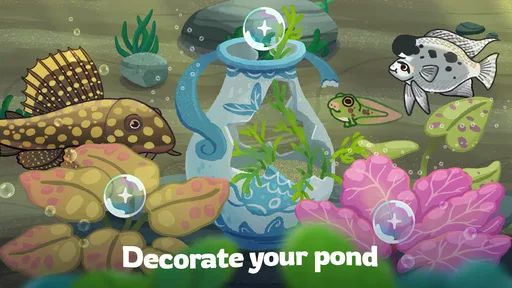
It also differs from aquarium-management games. An aquarium title often emphasizes decoration, tank layouts and careful visual presentation. A pond has a more natural feeling, and the inclusion of frogs alongside fish gives the setting a wider identity. I am not simply arranging a display case; I am checking on a small ecosystem-inspired space. That does not make it a realistic nature simulator, but it does give the game a warmer character than a purely decorative collection app.
Against idle games, the difference is mainly emotional. Idle games often make numbers and automatic accumulation the main attraction. Here, the creatures and the pond give progress a more tangible focus. I still need to accept that the pace is gentle, but I am returning to see a place rather than only a larger total. Players who enjoy watching a screen evolve may appreciate that distinction, while players who need constant decisions may find the loop too passive.
One useful tip is to avoid comparing every visit with the previous one. The game works better when I judge the pond over a longer rhythm. Opening it repeatedly to demand a dramatic change can make a calm design feel slow. I get more from it when I let the small additions and routine actions accumulate naturally instead of treating each session like a challenge that must produce a reward.
Small decisions that improve the experience
My first practical suggestion is to use it as a transition game. A few minutes with the pond can fit between work, study and bedtime more comfortably than a competitive game. I would avoid opening it when I am looking for a strong burst of excitement, because its gentle pace is a feature rather than a hidden action mode.
My second suggestion is to pay attention to what keeps me returning. If I enjoy the creatures and the visual atmosphere, the game has a solid foundation for me. If I only enjoy seeing progress move faster, I should be cautious about purchases. That distinction helps separate genuine enjoyment from the temporary satisfaction of accelerated advancement.
My third insight is that the game may suit shared, informal play better than its simple mechanics suggest. A child can understand the idea of caring for pond life, while an adult can use it as a quiet wind-down activity. It is not a multiplayer social experience in the way a competitive game is, but the pond can still become something to show, discuss or check together. The broad age rating supports that accessibility, though spending decisions should remain with the adult responsible for the device.
A fourth trade-off is device age. The minimum operating system requirement is Android 7.1, so the game is not limited to only the newest phones. That makes it easier to consider on an older compatible device, but the actual comfort of play will still depend on the phone’s general condition and screen experience. I would keep expectations sensible if I am installing it on hardware that already struggles with modern apps.
Who will get the most value
I think this is a strong match for players who enjoy animal-themed games but do not want a demanding objective list. It is also suitable for people who like checking in several times during the day, provided they are comfortable with gradual progress. The free starting point makes it easy to test without treating the download as a major commitment.
It may be especially appealing to someone moving away from stressful competitive games. The pond gives me a softer alternative when I still want to interact with something on my phone. It can also work for a player who finds large simulation games overwhelming and wants one focused setting rather than a complete virtual world.
I would be more hesitant to recommend it to players who want a substantial story, complex resource chains, detailed construction or a clear final objective. Someone who prefers games with difficult decisions may quickly reach the limits of the pond’s relaxed structure. Likewise, if I strongly dislike optional purchases, I should approach the free version carefully and avoid assuming that every convenience is included without spending.
The rating of 4.6 from around 18 thousand ratings suggests that the game has connected well with a sizeable audience, while more than a million installs show that it is not an obscure experiment. I would treat those figures as signs of broad interest rather than proof that every player will enjoy it. A calm simulation can be well received and still feel too slow for someone who wants constant activity.
Developer support and current snapshot
Runaway Play is the developer behind the game. The release date is March 19, 2025, and the current version is 1.25.11. Those details matter mainly because they identify the version I am evaluating rather than an older launch build. If I experience a problem, checking that the installed version matches the current release is a sensible first step before assuming the issue is part of the design.
The game’s presentation is focused enough that I do not need a long tutorial explanation to understand its premise. That is a strength for casual players, but it also means the enjoyment depends heavily on whether the central loop feels rewarding. There is no need to force myself through a complicated opening before reaching the pond’s main appeal. Conversely, players who expect a large amount of content immediately may interpret that focus as a lack of depth.
I also appreciate that the concept is easy to return to after a break. Some simulations punish me for forgetting them, while others become confusing when I return after several days. Pondlife is better suited to an occasional rhythm. I can make it part of my day without turning it into another obligation, which is exactly where its value lies for me.
My buy-or-skip verdict
I recommend trying it if I want a free, gentle simulation centered on caring for pond creatures. The game delivers its best value through atmosphere, accessibility and short visits rather than through complexity. I would download it, play without spending first, and decide based on whether the pond itself keeps drawing me back.
I would skip it if my priority is deep management, intense challenge or a large story-driven adventure. I would also skip optional purchases unless I had already established that the free experience genuinely fits my routine and I understood what the purchase would add. The broad purchase range means careful judgment is more sensible than treating every upgrade as automatically worthwhile.
Overall, Pondlife is a modest but appealing simulation game. It does not try to compete with expansive farming worlds or demanding strategy titles, and that restraint is exactly why it can work. For me, its value comes from opening the game, making a few caring choices and leaving with a calmer feeling than I had before. If that sounds more useful than another high-pressure mobile distraction, the free download is worth a personal test.
Verdict
Strengths of Pondlife — Fish, Frogs & More!
- Relaxing pond-life simulation with a calm, nature-focused atmosphere.
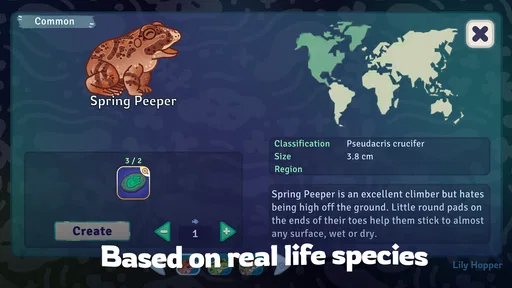
- Includes varied aquatic creatures, including fish, frogs, and other wildlife.
- Simple controls make it approachable for casual players of all ages.
- Encourages observation and patience rather than fast-paced competition.
- Short play sessions fit well into daily breaks or quiet downtime.
Limitations of Pondlife — Fish, Frogs & More!
- Progress may feel slow for players who prefer constant action.
- The relaxing format can become repetitive after extended play sessions.
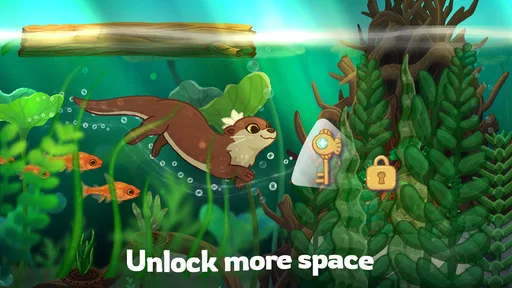
- Some creatures or features may require significant time to unlock.
- Limited challenge may not appeal to competitive or strategy-focused players.
- Performance and battery use may vary on older mobile devices.
Other Releases by Runaway Play
View All
Flutter Starlight — Cozy Game
Casual4.7

Hatch Dragons
Simulation4.6
Similar Picks in This Category
View All
Truckers of Europe 3
Wanda Software4.3

Town Building Life Simulator
XGame Global4.2

Fidget Toys Trading・Pop It 3D
Freeplay Inc4.7

Sculpt People
CrazyLabs LTD4.4

Scary Teacher 3D
Z & K Games4.2

Hair Tattoo: Barber Shop Game
CASUAL AZUR GAMES4.3
Frequently Asked Questions
What is Pondlife — Fish, Frogs & More!?
Pondlife — Fish, Frogs & More! is an educational nature app focused on the animals and small creatures found in ponds and freshwater habitats. It helps users explore fish, frogs, insects, amphibians, and other pond life through informative content and interactive discovery. The app is suitable for curious children, families, students, and anyone interested in learning more about freshwater ecosystems.
Is Pondlife — Fish, Frogs & More! suitable for children?
Yes, Pondlife — Fish, Frogs & More! is designed to be accessible to younger users while remaining interesting for adults. Its nature-focused subject matter can encourage children to observe wildlife and understand how pond ecosystems work. Parents should still check the app’s content, language, advertising, and privacy settings on the relevant app store, especially if the application will be used by younger children without supervision.
Does the app require an internet connection to work?
The internet requirements may depend on the version of Pondlife installed and the features being used. Basic educational information may be available after installation, while external links, updates, media, or certain interactive elements could require an active connection. Before downloading, users with limited data should review the store description and test the main sections on Wi-Fi to determine how much of the app works offline.
Does Pondlife — Fish, Frogs & More! include ads or in-app purchases?
The presence of advertising, paid upgrades, or in-app purchases can vary according to the platform and the current version of the application. Users should review the Google Play or App Store listing before installing, paying particular attention to the sections describing ads, purchases, and age suitability. If children will use the app, parental controls are recommended to prevent accidental purchases or interaction with unsuitable external content.
What devices are compatible with Pondlife — Fish, Frogs & More!?
Compatibility depends on whether you are using Android or iOS, as well as the operating system version and device hardware. Older phones and tablets may not support the latest release or may display interactive content less smoothly. Check the official store page for the required Android or iOS version, available storage, and developer notes before downloading. Keeping your device updated can also help avoid installation and performance problems.
Play our best games!


